Learn how spatial design impacts global human dignity and master the legal, ethical, and professional duties required to build a more just world.
Architecture has a profound influence on how people live, work, participate in society, and access essential services. Yet discussions about professional responsibility are often framed around building performance, safety, sustainability, and regulatory compliance, with less attention given to the human rights implications of design and development decisions. Increasingly, however, architects are being called upon to consider how their work affects issues such as housing, accessibility, cultural identity, inclusion, displacement, and community participation.
International frameworks, including the right to adequate housing, Indigenous rights, cultural rights, environmental rights, and principles of inclusive development, are reshaping expectations of the built environment professions. While architects are not legal experts or policymakers, their decisions can directly influence whether communities are included or excluded, whether heritage and cultural identity are protected, and whether development contributes positively to human wellbeing and social equity.
This session examines architecture through a human rights lens and explores how rights-based thinking can inform professional practice. Participants will consider the relationship between architecture, ethics, housing, participation, accessibility, and community development, while gaining practical insight into how human rights principles can influence design processes, stakeholder engagement, and project outcomes. The course challenges traditional assumptions about the role of architects and considers how the profession can contribute to more equitable and inclusive built environments.
Key Topics Discussed:

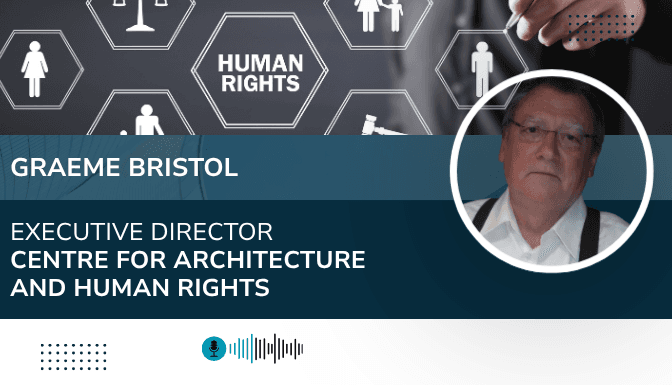
Executive Director at Centre for Architecture and Human Rights
Graeme Bristol, a Canadian architect, is the founder and executive director of the Centre for Architecture and Human Rights, an international foundation advancing a rights-based approach to development in the practice of architecture through ongoing demonstration projects, research and education programmes. He holds a Masters in architecture from the University of British Columbia and a Masters in human rights law from Queen’s University Belfast.
