This course presents the OSHA’s requirements for practices and procedures to protect employees in general industry from the hazards of entering “permit spaces.”
This online engineering PDH course presents the Occupational Safety and Health Administration’s requirements for practices and procedures to protect employees in general industry from the hazards of entering “permit spaces.” The term “permit spaces” refers to spaces that meet OSHA’s definition of a “confined space” and contain health or safety hazards. Many workplaces contain spaces that are considered to be “confined” because their configurations hinder the activities of employees who must enter into, work in or exit from them. In many instances, employees who work in confined spaces also face increased risk of exposure to serious physical injury from hazards such as entrapment, engulfment and hazardous atmospheric conditions. For example, confinement, limited access and restricted airflow can result in hazardous conditions that would not normally arise in an open workplace. This course describes employers’ responsibilities when these conditions exist.
Topics: OSHA’s confined space standard Controlling hazards Informing contract employees Worker training Assigned duties Emergencies.
Intended Audience: This course is intended for all disciplines of engineers whose job description may require a comprehensive knowledge of OSHA safety procedures for permit-required confined spaces.
Publication Source: This course is based on the Occupational Safety and Health Administration document, “Permit-Required Confined Spaces,” OSHA 3138-01R, 2004.
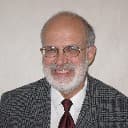
Civil Engneering faculty member for 27 years
Dr. Rossow is a graduate of the University of Michigan with B.S., M.S., and Ph.D. degrees. He is a licensed Professional Engineer in the State of Illinois. He taught civil engineering for over 35 years, including six years at Washington University in St. Louis and 29 years at Southern Illinois University Edwardsville, where he was the Chair of the Civil Engineering Department for ten years. His areas of expertise are in civil engineering and mechanics. He has consulted for various organizations, including government agencies and an international offshore drilling company. He has published numerous technical journal articles and technical reports for a variety of governmental agencies and private sector organizations. Mark P. Rossow, PE, PhD Licensed Professional Engineer in State of Illinois License No. 062.040560 Dr. Rossow is a graduate of the University of Michigan with B.S., M.S., and Ph.D. degrees. He taught civil engineering for over 35 years, including six years at Washington University in St. Louis and 29 years at Southern Illinois University Edwardsville, where he was the Chair of the Civil Engineering Department for ten years. His areas of expertise are in civil engineering and mechanics. He has consulted for various organizations, including government agencies and an international offshore drilling company. He has published many journal articles and technical reports.
