The course is based on twenty-four OSHA Quick Cards and Fact Sheets related to hazards associated with construction, demolition, and cleanup.
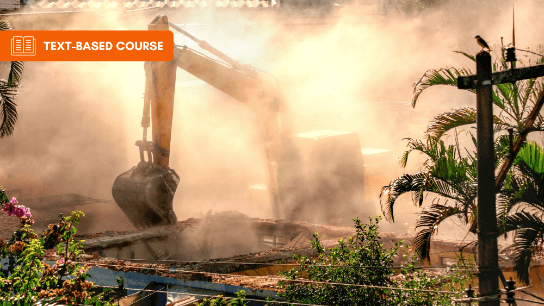
Construction, demolition, and cleanup projects are inherently hazardous. Accident rates in these industries are accordingly higher than in other industries. OSHA’s mission is to reduce these accident rates through safety rules and regulations. This course provides an introduction to the OSHA rules that cover common situations, for example, fall prevention, scaffold safety, worker safety in trench work, asbestos and lead exposure, electrical hazards, respirator use, and nail gun use.
The course is based on twenty-four OSHA Quick Cards and Fact Sheets related to hazards associated with construction, demolition, and cleanup. As a result, the course material is concise, easy to read, and easy to remember.
Topics: Safety requirements for scaffolds, trench excavation, and trench-worker protection Principles of demolition safety and cleanup Asbestos and lead hazards, especially as they occur in demolition projects Fall protection in residential construction and in general industry Fall dangers in roof work (installing trusses and tile, and repairing) Principles of working safely with electricity on construction and cleanup sites Principles of avoiding electrical hazards associated with downed electrical wires Use of respirators and differences between respirators and surgical masks Precautions to take when employing pneumatic nail guns Precautions to take when employing chain saws Cold stress equation and how to protect workers from cold-temperature dangers
Intended Audience: for civil and construction engineers and others who serve as project managers in construction, demolition, and cleanup projects.
Publication Source: US Dept. of Labor (OSHA)
Civil Engneering faculty member for 27 years
Dr. Rossow is a graduate of the University of Michigan with B.S., M.S., and Ph.D. degrees. He is a licensed Professional Engineer in the State of Illinois. He taught civil engineering for over 35 years, including six years at Washington University in St. Louis and 29 years at Southern Illinois University Edwardsville, where he was the Chair of the Civil Engineering Department for ten years. His areas of expertise are in civil engineering and mechanics. He has consulted for various organizations, including government agencies and an international offshore drilling company. He has published numerous technical journal articles and technical reports for a variety of governmental agencies and private sector organizations. Mark P. Rossow, PE, PhD Licensed Professional Engineer in State of Illinois License No. 062.040560 Dr. Rossow is a graduate of the University of Michigan with B.S., M.S., and Ph.D. degrees. He taught civil engineering for over 35 years, including six years at Washington University in St. Louis and 29 years at Southern Illinois University Edwardsville, where he was the Chair of the Civil Engineering Department for ten years. His areas of expertise are in civil engineering and mechanics. He has consulted for various organizations, including government agencies and an international offshore drilling company. He has published many journal articles and technical reports.
