
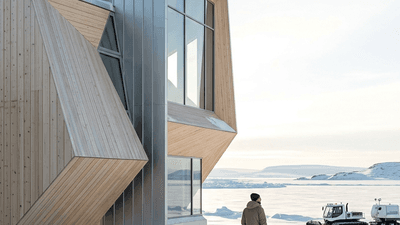



The architecture of tomorrow isn't drafted in the boardrooms of today; it is incubated in the design studios of our leading universities. For Canadian architecture professionals, shifts in academic leadership at premier institutions are not just administrative updates—they are early indicators of where the profession's talent pipeline, theoretical focus, and methodological rigor are heading. The recent announcement that Mason White has been appointed as the new dean of the University of Toronto's John H. Daniels Faculty of Architecture, Landscape, and Design, effective July 2026, is exactly this kind of bellwether.
A New Chapter for the Daniels Faculty
Taking the helm for a five-year term starting in the summer of 2026, White steps into the role at a critical juncture for Canadian architecture. The profession is currently navigating a gauntlet of compounding challenges: an urgent national housing crisis, the imperative of decarbonization, and the ongoing reconciliation with Indigenous communities. The Daniels Faculty, one of the most influential design schools in North America, plays a massive role in shaping how the next generation of architects will respond to these crises.
White is no stranger to the Daniels community—or to the broader Canadian architectural discourse. As a long-standing professor and an award-winning practitioner, his elevation to dean represents a continuity of excellence, but also a distinct ideological pivot toward architecture as a tool for territorial and environmental problem-solving.
The "Lateral" Influence: Redefining Architectural Boundaries
To understand the implications of White’s appointment, one must look at his body of work. As a founding partner of Lateral Office (alongside Lola Sheppard), White has spent the last two decades dismantling the traditional boundaries between architecture, landscape, and urbanism.
"Architecture is no longer confined to the footprint of a single building. It is a discipline that must negotiate with ecology, infrastructure, and the deep realities of geography."
Lateral Office’s work, most notably their representation of Canada at the 2014 Venice Biennale in Architecture with Arctic Adaptations: Nunavut at 15, fundamentally shifted how the Canadian architectural establishment views the North. Rather than treating remote or extreme environments as marginal to the profession, White’s research positioned them as central testing grounds for resilience, adaptation, and spatial justice.
What Can Firms Expect from Future Graduates?
For principals, hiring managers, and senior architects across Canada, the curriculum and studio culture fostered under White’s leadership will directly impact the skillsets of incoming interns and junior architects. Firms can anticipate graduates who possess:
- Expanded Definitions of Site: A move away from the isolated "property line" approach, toward an understanding of sites as nodes within larger ecological and infrastructural networks.
- Climate-First Methodologies: Deeply ingrained instincts for climate adaptation, particularly concerning extreme weather, permafrost thaw, and resource scarcity.
- Research as Practice: A rigorous, investigative approach to design, where data collection, mapping, and historical context are given equal weight to formal aesthetic exploration.
- Public Realm Advocacy: A strong emphasis on architecture's civic duty, focusing on community engagement and spatial equity.
Bridging the Academy and the Industry
One of the persistent critiques of architectural education in Canada is the perceived gap between academic theory and the pragmatic realities of professional practice. White’s dual identity as a scholar and an active practitioner positions him uniquely to bridge this divide.
His work with Lateral Office has consistently demonstrated how speculative research can inform built realities and policy. By bringing this ethos to the dean’s office, we are likely to see stronger partnerships between the Daniels Faculty and private practices, municipalities, and policy-makers. This is a crucial development for an industry that desperately needs applied research to solve logistical and material challenges in the current construction market.
Shifting Paradigms in Architectural Focus
To visualize how academic leadership influences the professional toolkit, consider the shift from traditional architectural paradigms to the expansive, research-driven model that White champions:
| Domain | Traditional Paradigm | The Emerging "Lateral" Paradigm |
|---|---|---|
| Primary Focus | The singular building as an object. | The building as part of an infrastructural system. |
| Site Context | Immediate urban or suburban surroundings. | Broad territorial, geographic, and climatic conditions. |
| Role of Architect | Form-giver and technical coordinator. | Spatial researcher, advocate, and systems thinker. |
| Key Challenges | Aesthetics, basic program, and code compliance. | Climate resilience, resource economies, and spatial equity. |
Practical Implications for Canadian Firms Today
While the first cohort fully shaped by White’s tenure as dean won't hit the job market until the late 2020s, the ripple effects of his appointment will be felt much sooner. Here is how Canadian firms should be interpreting this academic shift:
1. Reevaluating Firm Portfolios
As the academic discourse heavily favors infrastructure, landscape integration, and climate resilience, clients—particularly in the public sector—are becoming more educated and demanding in these areas. Firms that still treat sustainability as an "add-on" rather than a foundational design driver will find themselves outpaced by practices that embody the holistic approach taught at leading institutions.
2. The Rise of the In-House Researcher
We are already seeing a trend where top-tier Canadian firms are hiring dedicated architectural researchers—professionals who may not draft construction documents, but who analyze urban data, study material lifecycles, and write grants. White’s leadership will legitimize and accelerate this career path. Mid-sized firms should consider how integrating research roles can make their bids for complex public projects more competitive.
3. A Renewed Focus on the North and Rural Canada
For decades, Canadian architectural prowess has been heavily concentrated in Toronto, Vancouver, and Montreal. White’s deep academic focus on Nunavut and remote geographies serves as a reminder that some of the most urgent and innovative architectural work in Canada is happening outside our major metropolitan centers. Firms looking to diversify their markets should view Northern and rural infrastructure not as a niche, but as a critical frontier for architectural innovation.
Conclusion: A Vanguard for the Future
The appointment of Mason White as the incoming dean of the John H. Daniels Faculty of Architecture, Landscape, and Design is a clear signal that the University of Toronto is looking outward—toward the environment, toward the vastness of the Canadian landscape, and toward the systemic crises defining our era.
For the Canadian architectural profession, this is an invitation to elevate our practice. The students who will train under White’s tenure will enter the workforce equipped to tackle problems that many current practitioners are only just beginning to understand. By aligning our professional practices with the rigorous, climate-responsive, and research-driven ethos that White champions, we can ensure that Canadian architecture remains not only relevant, but essential to building a resilient future.