Canadian architectural practice in late 2026 is defined by a striking geographical and typological divergence. On one end of the spectrum, targeted federal investments are channeling capital into remote and sub-Arctic communities, demanding innovative, climate-adapted housing typologies. On the other, metropolitan engines are witnessing a generational realignment as institutional permits shatter historical benchmarks while speculative private development continues its calibrated recalibration. For principals and project leads, navigating this dual-speed landscape requires far more than aesthetic dexterity—it demands an uncompromising mastery of procurement logistics, regional climate performance, and rigorous contractual risk mitigation.
The ...
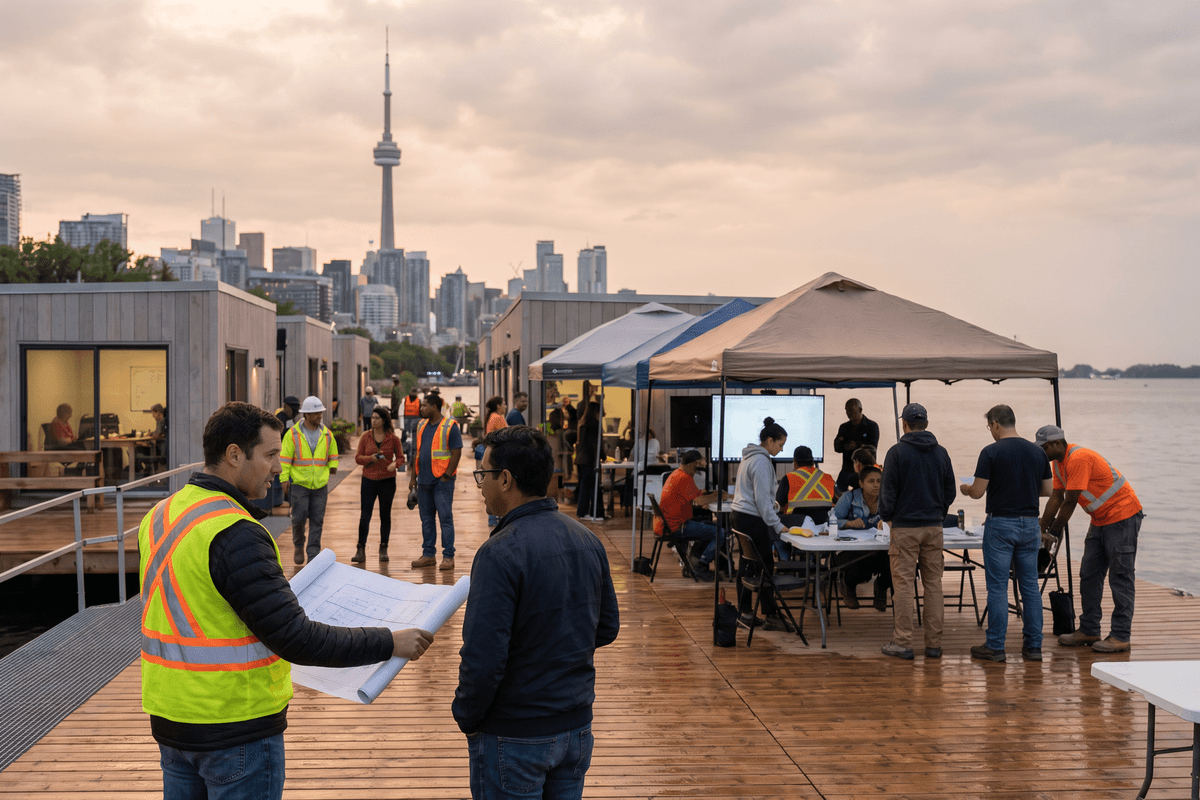
Across Canada’s metropolitan waterfronts, the era of rigid, decade-long master planning without interim activation is rapidly drawing to a close. As Canadian cities confront complex post-pandemic civic expectations, shifting real estate cycles, and the urgent need to reconnect urban cores with blue-green infrastructure, architects and landscape architects are turning to ...
Across Canadian design studios in late 2026, architectural practice is caught between two radically different operational realities. In urban commercial towers, firms are embedding generative algorithms, computational feasibility engines, and machine learning into daily workflows at an unprecedented clip. Simultaneously, on the country’s remote frontiers—from permafrost-laden ...
Every two years, the announcement of the Governor General’s Medals in Architecture offers an essential snapshot of the nation’s built environment. Rather than reflecting fleeting aesthetic trends, the biennial awards celebrate projects that embody enduring cultural value, technical mastery, and a profound commitment to the public good. As documented in the August 2026 issue ...
Architecture is fundamentally an act of translation—the arduous process of converting ethereal civic visions into tangible, structural realities. In 2026, Canadian architectural practice finds itself at a fascinating intersection of these two extremes. On one hand, our firms are achieving unprecedented global recognition for high-concept institutional and cultural design. On ...
For over a century, the unwritten rule of urban utility design has been remarkably simple: hide it. From subterranean transformer vaults to chain-link-fenced substations banished to the industrial edges of our cities, energy infrastructure has long been treated as a spatial blight—a necessary evil to be screened by aggressive landscaping or buried beneath the pavement. But as ...
In the evolving landscape of Canadian architecture, the profession's mandate has split into two distinct, sometimes competing, extremes. On one end of the spectrum, architects are tasked with solving the national housing crisis through hyper-scaled, rapid densification. On the other, there is a growing demand for hyper-specialized, highly tuned institutional spaces that ...
When the final structural timber elements were recently hoisted into place at the Basswood Senior Residences in Brampton, Ontario , it signaled much more than the topping out of a new building. It marked a critical convergence of three urgent mandates currently reshaping Canadian architectural practice: the imperative for affordable senior housing, the aggressive pursuit of ...
Twenty years ago, Montreal made a calculated bet on the intangible. By seeking and securing the UNESCO City of Design designation in 2006, the city committed to a premise that was, at the time, highly radical for a North American municipality: that design excellence is not a luxury add-on, but a fundamental driver of civic identity, economic vitality, and social equity. ...
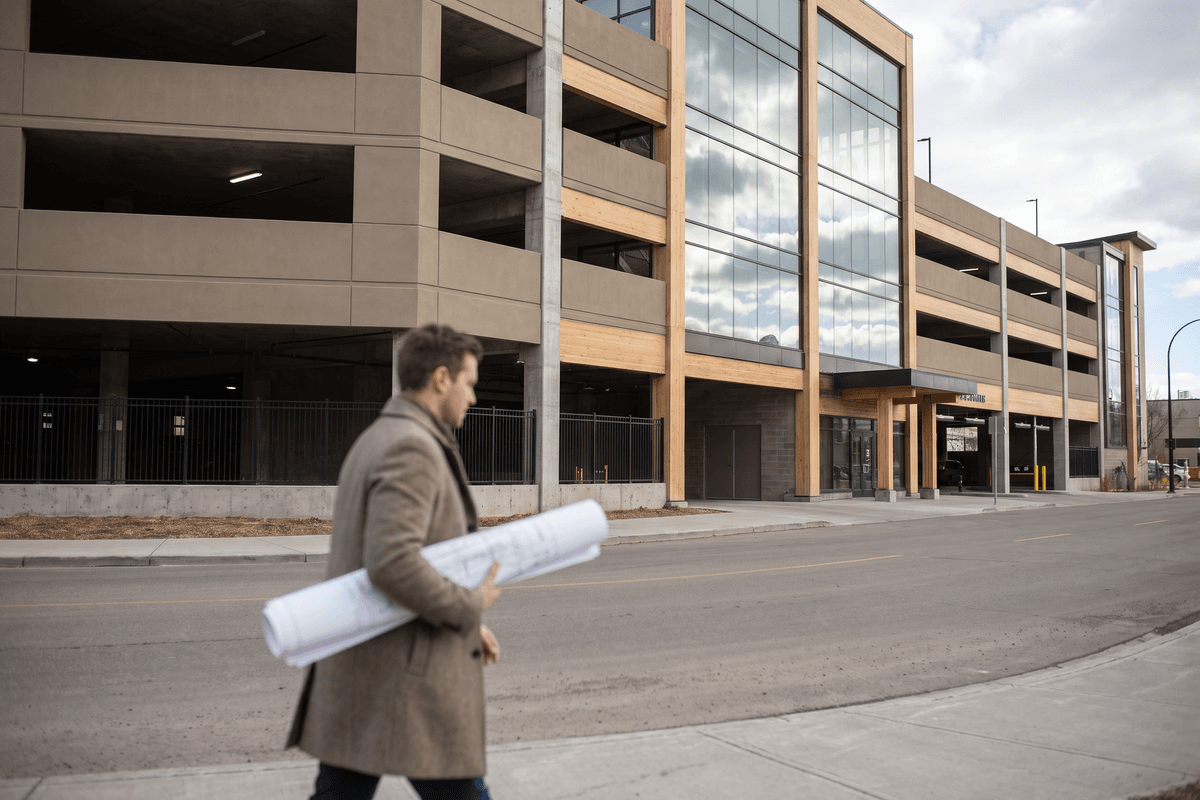
For decades, the urban parking garage has been the architectural equivalent of a necessary evil. Relegated to the realm of pure utility, these structures are typically characterized by their grim concrete monoliths, low clearances, and sloped floors—spaces designed exclusively for the storage of automobiles, with human experience treated as a distant afterthought. But a ...
For decades, the architectural evolution of the Canadian airport has been dictated by a singular, unyielding ethos: bigger is invariably better. Driven by the consolidation of global air traffic, firms have spent the last thirty years designing monumental mega-hubs characterized by sprawling retail concourses, soaring glass atriums, and complex, multi-level wayfinding ...
For decades, the narrative of the "starchitect" was overwhelmingly singular, male, and autocratic. But in the boardrooms and drafting studios of Canada’s most influential firms, a quieter, far more profound revolution has been rewriting the rules of practice. The recent inclusion of KPMB founding partners Marianne McKenna and Shirley Blumberg in a new anthology, Women ...
In 2026, Canadian architecture finds itself at a profound demographic and cultural crossroads. We are mourning the loss of foundational titans who built our mid-century civic infrastructure, while simultaneously pushing the boundaries of ecological design and competing at the highest levels on the global stage. As the demands on Canadian firms grow—ranging from complex civic ...